Romestead Beginner Guide & Tips: build, food, combat, and gods
Updated May 29, 2026 · Early Access Build
Beginner decision dashboard
What are you trying to fix first?
Pick the current problem and jump into the tool or wiki route that solves it.
Solve processed food before adding citizens.
- 1Plant wheat first
- 2Connect flour and bread
- 3Store finished food near people
Romestead is a game that does not hold your hand. The Early Access build is full of hidden mechanics, unintuitive systems, and traps that will catch new players off guard. After spending dozens of hours across multiple playthroughs and reviewing feedback from the community, here are the most important tips and tricks that will save you time, resources, and frustration.
Quick Answer
The single most important tip: do not build houses without matching workplaces. Unemployed citizens drain food and provide nothing. Also, rush the cart technology - it is the biggest quality-of-life upgrade in the game. And always cook food before storing it; citizens will not cook for themselves.
Resource & Transport Tips
Carry One Log at a Time - Then Get the Cart
In Romestead, logs and rocks are physical objects, not inventory items. You pick them up, carry them on your shoulder, and drop them at your build site. Early on, you can only carry one log at a time. This is the biggest time sink in the early game.
The solution: Rush toward the cart technology in the tech tree. The cart lets you transport multiple logs at once. This single upgrade cuts your building time in half. Prioritize it over everything else.
Convert Logs to Planks on the Spot
Instead of carrying raw logs back to base, you can convert them to wood planks on the spot. Place a log chunk back onto a tree stump and attack it. The log converts directly into planks, which stack in your inventory. This saves multiple trips.
Stick Farming: Throw Rocks at Trees
Sticks are used for arrows and other crafting. To get sticks quickly, pick up rocks and throw them at trees. The impact knocks sticks loose. Find a rhythm where you can pick up and re-throw without repositioning - the rock bounces unpredictably, so staying in one spot helps.
Throw Flint on Rocks for Shards
Need flint shards? Pick up flint and throw it against a rock. The collision produces flint shards, which are used in early crafting recipes. This is faster than waiting for flint to spawn naturally.
Use the Cart for Long-Distance Hauling
Once you unlock the cart, load it up with resources before heading back to base. You can put multiple logs, rocks, and other heavy materials in it. The cart follows you as you move, making long-distance resource runs much more efficient.
Building & Settlement Tips
Plan Your Layout Before Building
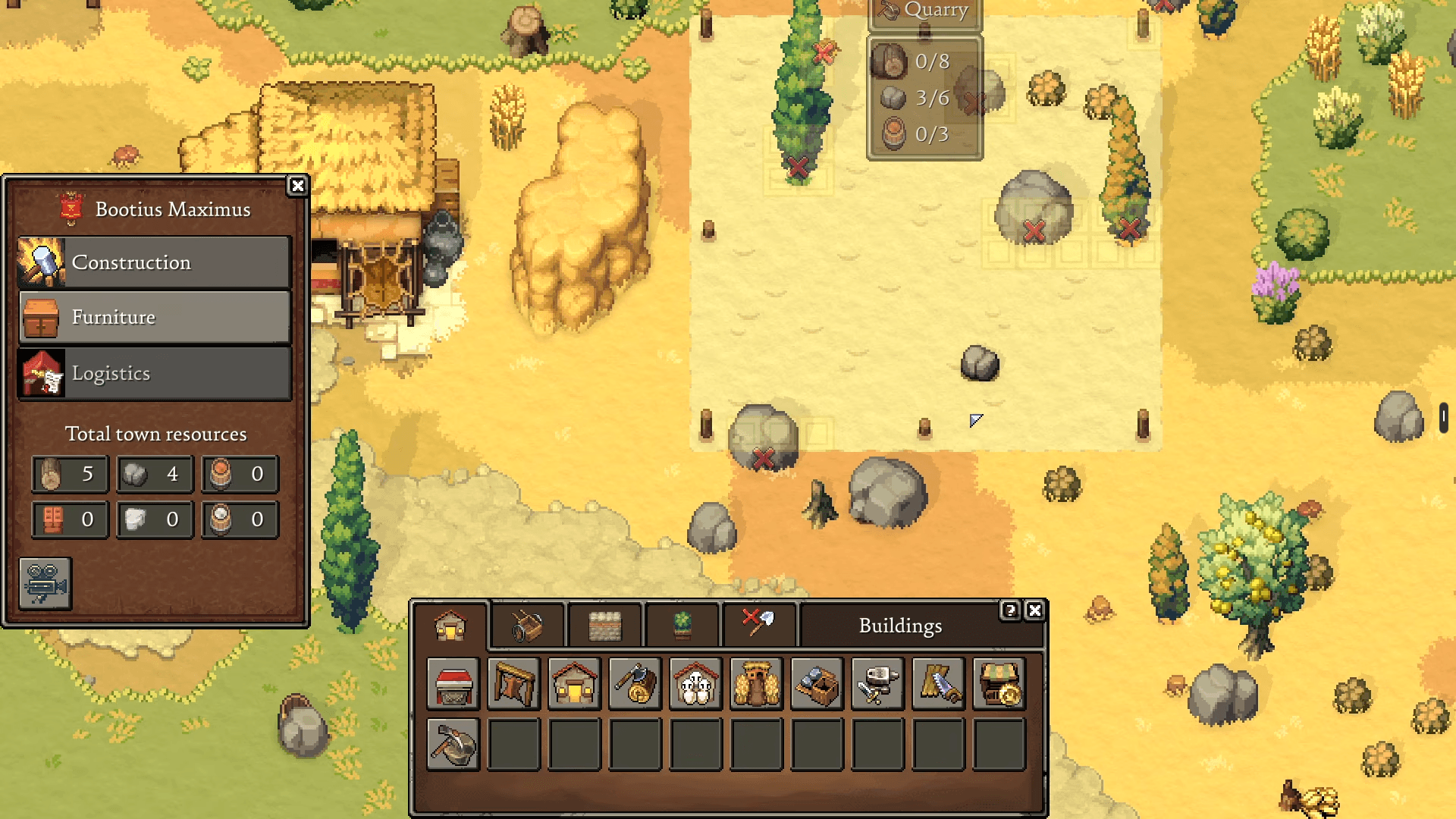
Buildings in Romestead are permanent once placed. There is no confirmed building relocation mechanic in the current Early Access build. Before placing a structure, consider:
- Proximity to resource nodes (trees, stone, ore)
- Space for future expansion
- Defensive positioning against night attacks
- Access to water and farmland
Build Walls Before the First Night
Zombies come out at night. If you are playing solo, being caught outside your settlement at night is dangerous. Get a basic perimeter wall up as early as possible. Even a simple wooden wall keeps your settlement safe while you sleep through the night.
Do Not Build Houses Without Workplaces
Every house attracts a citizen. Every citizen needs food. If you build a house without a matching workplace (Lumberjack, Leather Worker, etc.), that citizen is unemployed - eating your food for zero benefit. Only build houses when you have a workplace ready.
Citizens Are Passive - Do Everything Yourself
A critical misunderstanding: citizens in Romestead are passive resource generators, not autonomous workers. They do not:
- Chop trees or mine ore
- Hunt animals
- Move items between storages
- Cook raw food
- Build or repair structures
A Lumberjack citizen simply generates logs over time while sitting in their hut. You still need to do everything else manually.
Combat Tips
Dodge Rolling Is Your Best Friend
Romestead has a dodge roll mechanic (press Space). Use it liberally. Most enemy attacks have a wind-up animation - dodge through the attack, not away from it. This positions you behind the enemy for a counter-attack.
Heavy Attacks Deal More Damage
Hold the attack button to charge a heavy attack. These deal significantly more damage and can stagger enemies. Use them on tougher foes and bosses. The trade-off is the charge time, so learn enemy attack patterns to find safe openings.
Use Scrolls and Magic
Scrolls drop from enemies, dungeons, and chests. They provide powerful magic attacks like bolt (ranged damage) and ray of frost (slow effect). Save these for tough fights - they are consumables, so do not waste them on basic zombies.
The Boss Is Meant to Be Hard - Prepare Properly
The first boss (the giant bird) is a significant difficulty spike. Do not attempt it until you have:
- Full leather armor (hat, chest, legs)
- A spear or crossbow
- A shield (for blocking the dive attack)
- At least 100 arrows (for ranged cheese strategy)
- Cooked food for healing
Cheese strategy: If melee feels inconsistent, use a bow with charged shots. Hold the attack button to charge the bow for bonus damage. You can beat the boss from range with ~150 arrows, though it takes patience.
Farming & Food Tips
Always Cook Food Before Storing It
Citizens eat from your food storage, but they will not cook raw food. If you place raw meat or unprocessed wheat in storage, it sits there while your citizens starve. Always cook ingredients into finished food (bread, cooked meat) before depositing them.
The Food Chain: Wheat - Flour - Bread
The basic food production chain works like this:
- Plant wheat seeds in your farm area.
- Harvest wheat when it grows.
- Mill wheat at the millstone to get flour. You push the millstone around manually.
- Bake bread at the bakery using flour.
- Store bread in the food crate for citizens.
Bread is also a decent offering to the gods, so keep some extra for altar sacrifices.
Use the Farmstead Citizen
After defeating the first boss and progressing the god questline, you unlock the Farmstead building. Assign a citizen to it and they will automatically harvest crops in the surrounding area. This is a huge time-saver once you have a large farm operation.
God & Altar Tips
Do Not Waste Resources Experimenting with the Altar
The altar lets you sacrifice items to the gods. Many offerings are listed as "undiscovered," tempting you to throw random resources at it. Do not do this. Most experiments will fail and waste valuable materials.
Instead: Follow the main questline. Defeating bosses and progressing through god quests is the intended path. The altar rewards come naturally through progression, not random experimentation.
Use Worship Routes Instead of Guessing Offerings
Exact preferred offerings are not confirmed well enough to turn into a reliable table. The safer route is to choose a god by the problem you need solved, then follow confirmed unlocks and quest progression instead of throwing rare materials into random altar tests.
Use the Worship Planner when the real question is whether Ceres, Vulcan, Mars, Diana, Mercury, or Venus fits your current settlement problem.
God Talent Trees Unlock Buildings and Buffs
Each god has a talent tree that you level up through offerings. As you progress, you unlock:
- New buildings for your settlement
- Damage resistance buffs for citizens
- Combat bonuses for your character
- New crafting recipes and technologies
Focus on one god at a time to unlock their best rewards faster.
Exploration Tips
Mark Everything on Your Map
Romestead gives you map marking tools. Use them. Mark:
- Copper and iron ore nodes
- Survivor camps (for recruiting citizens)
- Dungeon entrances
- Resource-rich areas
- Dangerous zones to avoid early on
NPCs Will Steal Your Stuff
Small NPC creatures in the world will pick up and carry away items you leave on the ground. They will take anything - resources, gear, even animals. One player reported seeing an NPC pick up a squirrel and walk away with it on its head. If you drop items, pick them up quickly or store them in chests.
Break Everything for Hidden Chests
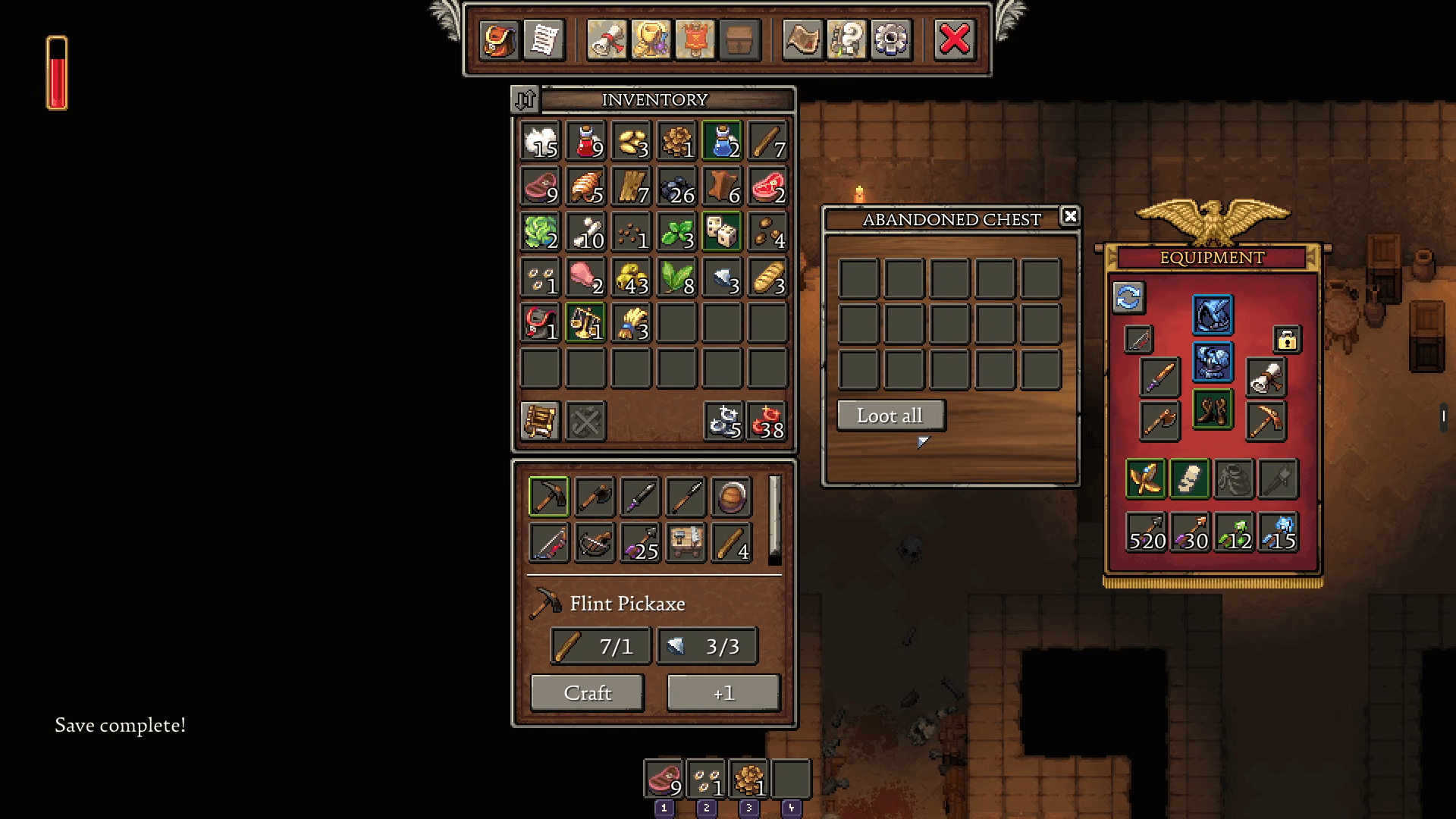
Almost every breakable object in the game has a chance to contain a hidden chest. Bushes, rocks, crates - smash them all. Chests contain random loot including gear, relics, and god offerings.
Relics Give Passive Bonuses
Relics are accessories you equip to your character for passive bonuses. Examples include:
- Lucky Dice: Increased critical hit chance
- Rudy Boots: Movement speed increase
- Various defense and attack bonuses
Relics drop from dungeons, chests, and boss kills. They are often better than crafted gear in terms of unique effects.
Different Biomes = Different Tiers
The further you get from your starting area, the more dangerous and rewarding the world becomes. Each biome has its own:
- Crafting tier - new resources and recipes
- Enemy types - stronger and more varied
- Atmosphere - from peaceful plains to dark, dangerous regions
You need to explore to progress. Staying in the starting area will lock you out of higher-tier content.
Common Mistakes to Avoid
- Building too many houses early. Each house = a citizen = food drain. Only build what you need.
- Ignoring the cart tech. Carrying one log at a time is miserable. Rush the cart.
- Fighting the boss unprepared. The first boss is a huge difficulty spike. Get full leather gear and 100+ arrows first.
- Wasting altar resources. Do not experiment with random offerings. Follow the questline.
- Storing raw food. Citizens cannot cook. Always store cooked food.
- Exploring at night solo. Zombies spawn constantly at night. Stay in your settlement or bring a friend.
- Ignoring dungeon traps. Some traps have no visual indicator and kill you instantly. Move carefully through dungeons.
- Leaving items on the ground. NPCs will steal them. Use storage chests.
Frequently Asked Questions
Q: How to split stacks in Romestead?
Current checked data does not confirm a reliable split stacks input. Until a confirmed control appears, store materials in separate chests, carry only the amount needed for a recipe, and avoid mixing construction materials with food storage.
Q: How do I move buildings in Romestead?
You cannot move buildings in the current Early Access build checked May 29, 2026. Once placed, structures are permanent. Plan your layout carefully before committing resources.
Q: How do I upgrade buildings?
Building upgrades are unlocked through the god talent trees and boss progression. Defeating bosses triggers new blueprints. Level up your gods through offerings to unlock additional building tiers and technologies.
Q: What is the best weapon early game?
The spear is a solid early weapon - good range and decent damage. The bow is essential for boss fights (charged shots). Avoid the rusty starting weapon as soon as possible; craft a copper-tier weapon at the blacksmith.
Q: How do I get more citizens?
Explore the world and find survivor camps. If you have an empty house available, you can recruit survivors to join your settlement. Mark their locations on your map so you can return when you have housing ready.
Q: Why are my citizens starving?
Check your food storage. If it contains raw food, citizens cannot eat it - they need cooked food. Also, unemployed citizens still consume food, so make sure every citizen has a job.
Was this beginner route useful?
Tap once after using the decision dashboard.